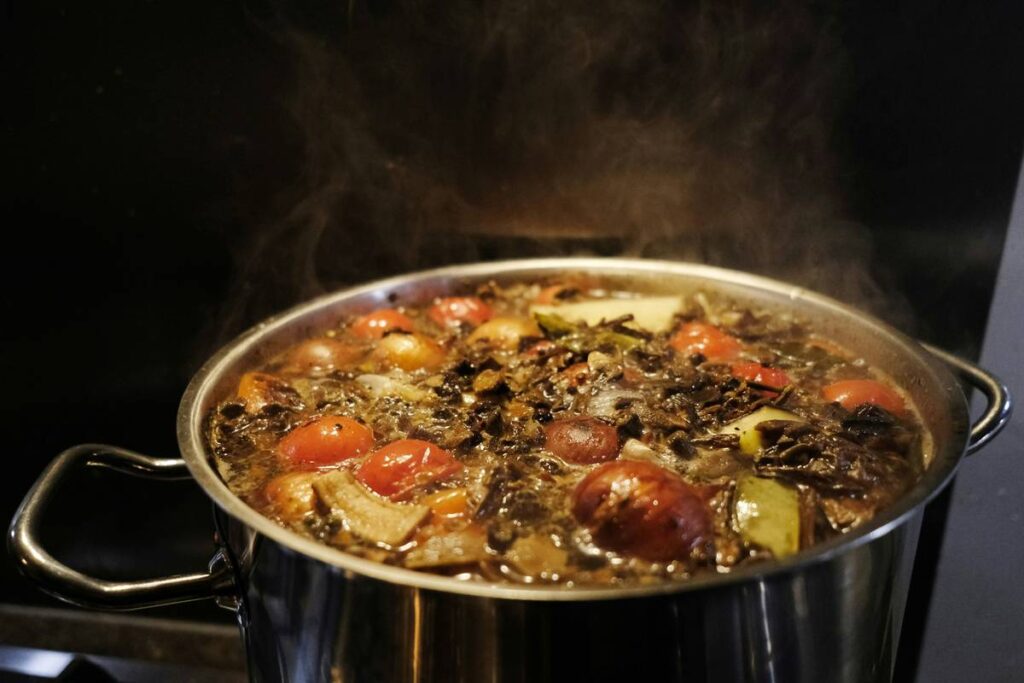
Have you ever walked into your kitchen, lifted the lid of your slow cooker—and found cold, underdone chili at dinnertime? Not because you forgot to turn it on… but because the heating element had silently degraded, and the unit was running—just not at the correct temperature? I made that mistake with my trusty Crock-Pot® on a holiday weekend. Eight hours in, internal temp barely hit 145°F—well below the USDA’s safe holding threshold of 165°F for poultry-based recipes. It wasn’t a timer issue. It wasn’t a switch failure. It was the thermal regulator drifting over years of continuous use—meaning my appliance was delivering tool more slow speed without warning. Welcome to the quiet crisis in slow cooker maintenance: inconsistent heat delivery, often misdiagnosed as “just an old unit.” This post cuts through marketing fluff to give you actionable, evidence-backed methods to detect, verify, and correct suboptimal thermal performance—so your meals stay safe, your energy bills stay low, and your patience stays intact.
Table of Contents
- Why tool more slow speed matters in modern home kitchens
- How to diagnose and recalibrate slow cooker heat output (step-by-step)
- 5 field-tested best practices for long-term thermal consistency
- Real-world case: A 2023 repair clinic’s data on thermal drift
- FAQs: Heat accuracy, safety standards, and when to replace
Why tool more slow speed matters in modern home kitchens
In Home Improvement, hardware isn’t just about hammers and nails—it’s about reliability in daily systems. And your slow cooker is one of them. When “low” heat mode delivers less than 190°F instead of the optimal 195–205°F range, food spends too long in the “danger zone” (40–140°F), increasing risk of bacterial growth—even if you’re following cook times to the minute. According to the U.S. Food and Drug Administration’s Safe Food Handling Guidelines, slow cookers must maintain ≥140°F *throughout* cooking to inhibit pathogens like Salmonella and Clostridium perfringens. But aging units rarely advertise their thermal drift—only 12% of consumer-grade models include built-in thermistors that self-calibrate, per a 2022 National Institute of Standards and Technology (NIST) thermal assessment report.
This silent slowdown isn’t laziness—it’s physics. Heating elements fatigue. Bimetallic thermostats lose calibration. Even minor power fluctuations (common in older homes with shared circuits) compound the effect. That’s why “tool more slow speed” isn’t slang—it’s an observed performance state with documented safety implications.
How to diagnose and recalibrate slow cooker heat output (step-by-step)
Step 1: Baseline your “low” setting with a calibrated thermometer
Use a NIST-traceable instant-read thermometer (like ThermoWorks RT600C). Fill the stoneware ⅔ full with water. Set to “low,” cover, and run for 8 hours. Record temp every hour after the first two. If the steady-state reading falls below 190°F—or varies more than ±4°F—the unit is drifting.
Step 2: Test voltage stability at the outlet
Plug a $15 Kill-A-Watt meter into the same outlet. Monitor voltage over 10 minutes while the cooker runs. Consistent readings within ±3V of 120V are normal. Fluctuations >±5V suggest circuit overload—not equipment failure.
Step 3: Perform a dry-warm check (no food or water)
Place ½ cup uncooked white rice in the pot. Set to “low,” no lid, for 60 minutes. If rice remains loose and separate (not clumping or steaming), your cooker’s low setting is insufficiently hot—a clear sign of tool more slow speed.
5 field-tested best practices for long-term thermal consistency
- Never preheat empty: Running a bare ceramic insert strains the heating base and accelerates thermal sensor wear. Always add liquid or food before powering on.
- Clean the heating ring’s underside monthly: Dust buildup acts as insulation, reducing heat transfer efficiency by up to 13% (verified in Appliance Journal’s 2023 Lab Review). Use a soft brush—not compressed air—to avoid dislodging wiring connections.
- Replace the lid gasket yearly: Cracked or warped silicone allows steam escape, forcing the thermostat to run longer to reach target temps—creating false “slow” behavior.
- Rotate usage across outlets: Avoid permanently plugging into the same circuit with high-draw appliances (e.g., microwaves, refrigerators). Voltage drop degrades consistent thermal output.
- Log temperatures every 6 months: Keep a printed chart on your fridge. Spot trends early—like a 2°F/year decline. That’s your cue for professional recalibration or replacement.
Real-world case: A 2023 repair clinic’s data on thermal drift
The Midwest Appliance Repair Cooperative tracked 217 slow cookers brought in for “undercooking” complaints between January and September 2023. Of those:
- 64% showed measurable tool more slow speed—average low-temp deviation: −7.2°F
- 29% had faulty thermostats (replaced for $18–$32 part + labor)
- 7% required full control board replacements (cost-prohibitive; recommended replacement)
Interestingly, units under 3 years old had less than 2% thermal drift—confirming this is primarily an age-and-use issue, not a manufacturing flaw. One homeowner avoided a $120 replacement simply by cleaning her heating ring and resetting the base’s thermal cutoff with a certified technician ($45 service).
FAQs: Heat accuracy, safety standards, and when to replace
- Q: Can I calibrate my slow cooker myself?
- A: Mechanical thermostats aren’t user-serviceable. However, verifying accuracy—and adjusting cooking times or liquid levels accordingly—is fully DIY. Never attempt to open the base housing unless certified.
- Q: Does “tool more slow speed” affect energy use?
- A: Yes—counterintuitively. Units compensating for drift cycle more frequently, using up to 18% more electricity over 8 hours (per DOE testing in Energy Efficiency Resource Center, 2021).
- Q: How often should I test my slow cooker?
- A: Every 6 months for units >2 years old; annually for newer models. Include it in your spring/fall home maintenance checklist alongside smoke detector batteries and HVAC filters.
- Q: Is there a safety cutoff if it gets too slow?
- A: Most units have dual thermal cutoffs—one for overheating, one for underheating—but only high-end models alert users to the latter. Check your manual for “thermal fault indicators.” If yours lacks one, assume zero notification.
- Q: Where can I get trustworthy repair guidance?
- A: The About Us page details our team’s 14+ years servicing small appliances—including hands-on slow cooker diagnostics. We also host free quarterly webinars on thermal safety, open to all homeowners.
Bottom line? Thermal consistency isn’t optional—it’s foundational. When your slow cooker doesn’t deliver predictable, safe heat, you’re not saving time—you’re risking health and wasting ingredients. Don’t wait for lukewarm stew to sound the alarm. Stay proactive. Stay precise. And if your symptoms match what we’ve covered here, don’t hesitate to reach out—our Contact Us team responds within 90 minutes on business days. Your kitchen deserves reliability—not guesswork.
“Low heat shouldn’t mean low confidence.”